
Choosing polished concrete sounds simple until you start comparing contractors. One company talks about gloss levels. Another talks about grinding steps. Someone else gives you a price without even asking what condition your concrete is in.
The real question is not just, “Who can polish concrete?” You need a polished concrete flooring company that checks the slab first, explains the finish options, prepares the surface correctly, and has experience with your type of property.
The best company for your project inspects the existing concrete, explains realistic results, offers clear finish choices, and has proven experience with residential or commercial floors.
Below, we’ll cover what makes a good contractor, what the polishing process involves, how residential and commercial projects differ, and what to ask before hiring anyone.
Why Choosing The Right Concrete Flooring Company Matters
Polished concrete is not just about making gray concrete shiny. The slab’s condition affects the final appearance, durability, and amount of work required.
Weak concrete, for example, can cause aggregate to come loose, reduce gloss, and shorten service life. The Concrete Polishing Council recommends checking surface conditions before polishing begins.
That is why the cheapest quote may not be the best deal. A contractor needs to understand what is under the grinder before promising a specific result.
Info: Cracks, old coatings, glue, stains, uneven areas, and previous repairs can all affect the final floor.
What Should You Look For in a Polished Concrete Flooring Company?
A reliable polished concrete flooring company should start by asking questions about the space. Is it a home, store, office, warehouse, restaurant, or another type of property? How much foot traffic will the floor receive?
They should also discuss the level of aggregate exposure and sheen you want. The Concrete Polishing Council uses defined classes for aggregate exposure and sheen levels, helping owners and contractors set clearer expectations before work begins.
Look for a company that can clearly explain:
- Surface preparation and repairs
- Grinding and polishing steps
- Aggregate exposure choices
- Sheen or gloss options
- Cleaning and maintenance needs
A good contractor should also show you examples of completed projects. Better yet, ask for examples similar to your property.
Quick Tip: Ask whether the contractor can prepare a sample or mockup. Industry guidance notes that mockups can help evaluate how the concrete and exposed aggregate will look after polishing.
What Do Polished Concrete Flooring Services Include?
Professional polished concrete flooring services usually involve much more than running a polishing machine over the floor.
The process can include removing old coatings or flooring materials, repairing damaged areas, grinding the surface, applying a densifier, honing, polishing, and finishing the floor to the agreed appearance.
The exact process depends on the slab. Concrete Polishing Council terminology describes polishing as a series of grinding, honing, and polishing stages used to reach a specified finish.
Here is a simple look at common project stages:
| Stage | What happens | Why it matters |
| Floor inspection | The slab is checked | Finds damage and problem areas |
| Surface preparation | Coatings and debris are removed | Creates a workable surface |
| Repairs | Cracks or damaged areas are addressed | Improves the finished result |
| Grinding and honing | Diamond tools refine the concrete | Controls texture and exposure |
| Polishing | The surface reaches the chosen sheen | Creates the final appearance |
| Final care | Cleaning guidance is provided | Helps protect the floor |
Not every floor needs the same steps. That is another reason to be careful with contractors offering one fixed process for every project.
Residential VS. Commercial Polished Concrete Flooring
The right approach also depends on where the concrete is located.
Residential Polished Concrete Flooring
Residential polished concrete flooring works well in basements, kitchens, living spaces, hallways, and converted lofts.
Homeowners often care more about appearance and how the floor fits with the rest of the room. You may want a certain sheen, exposed aggregate level, or decorative color.
Maintenance also matters. Nobody wants to spend every Saturday treating the floor while everyone else is enjoying the weekend.
Commercial polished concrete flooring
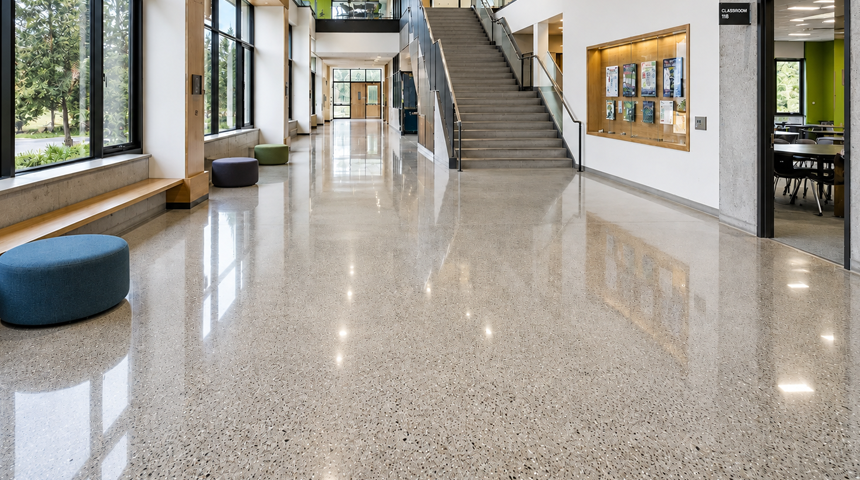
Commercial polished concrete flooring may face heavier foot traffic, carts, equipment, dirt, and daily use. Stores, offices, restaurants, schools, and other busy properties can have very different flooring demands.
Polished concrete is commonly used in high-traffic public spaces, including retail locations, schools, airports, restaurants, and medical facilities.
For these projects, the contractor should consider traffic levels, cleaning routines, expected appearance, and how the space is used each day.
Fact: Industry guidance has identified lower life-cycle costs, fewer moisture-related problems beneath traditional floor coverings, and more decorative options as benefits of polished concrete.
How Do You Compare Polished Concrete Contractors?
Do not choose polished concrete contractors based on price alone. Compare what each quote actually includes.
One contractor may include repairs and detailed surface preparation. Another may charge for those items later. That can make a cheap quote grow rather quickly.
Ask each contractor the same questions:
- Will you inspect the slab before giving the final price?
- What repairs are included?
- What aggregate exposure and sheen can I choose?
- Have you completed similar projects?
- What maintenance will the floor require?
You can also ask whether the company or its workers hold industry training or certification. The Concrete Polishing Council offers certification based on polishing knowledge and, at its Craftsman level, verified work experience.
What Should a Concrete Polishing Company Tell You Before Work Starts?
A trustworthy concrete polishing company should set realistic expectations.
Existing concrete has a history. Cracks, patching, previous flooring, stains, surface strength, and slab variations may remain visible after polishing.
That is not always bad. However, you should know what to expect before the machines arrive.
Warning: Be cautious if a contractor guarantees that an older slab will look exactly like a photo without first inspecting it.
The company should also explain maintenance. Polished concrete can be relatively easy to care for, but it still needs regular cleaning and proper maintenance. Industry resources provide daily, weekly, and periodic care recommendations for polished floors.
When Should You Call a Professional?
Call a professional when you want to polish an existing concrete slab, restore an older polished floor, or plan polished concrete for new construction.
Professional help is especially important when the slab has cracks, old adhesives, coatings, uneven sections, or weak areas. Surface repairs are common on floors being prepared for polishing, so discuss these issues before the project begins.
A contractor can tell you what can be corrected, what may remain visible, and which finish makes sense for the space.
Conclusion
The best polished concrete flooring company is not simply the one with the lowest quote or the biggest polishing machine. Look for experience, clear communication, proper floor preparation, realistic expectations, and a process that matches how you use the property.
Whether you need a floor for your home or a busy commercial space, compare the scope of work before you choose. Consider Davids Flooring of NY when discussing polished concrete options for residential or commercial flooring projects.
Frequently Asked Questions
How long does polished concrete flooring last?
Polished concrete can provide a long service life when the slab is sound, the polishing process is done correctly, and the floor receives proper care. Traffic, spills, cleaning methods, and the original concrete condition can all affect its performance.
Is polished concrete good for a house?
Yes. Polished concrete can work well in kitchens, basements, living areas, hallways, and other rooms with suitable concrete slabs. You can also choose different sheen levels and aggregate exposure to change the finished appearance.
Is polished concrete suitable for commercial buildings?
Yes. Polished concrete is commonly used in commercial and public spaces that receive significant foot traffic. The required finish and maintenance plan should match the business type and daily use.
How do I choose between polished concrete contractors?
Compare experience, previous projects, inspection methods, repair work, finish options, maintenance guidance, and what each quote includes. Ask contractors to explain the expected result for your actual slab rather than relying only on sample photos.